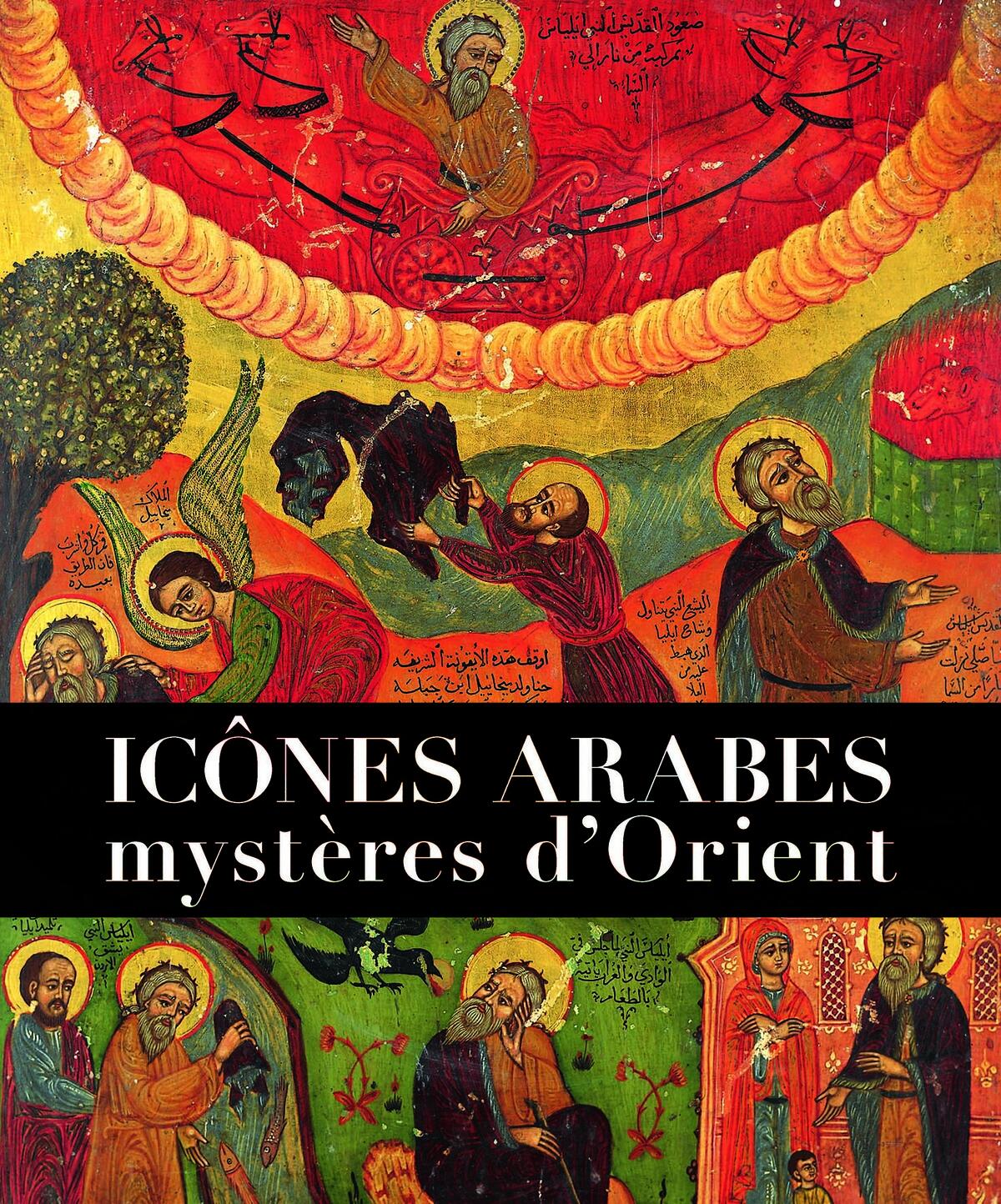
Icônes arabes, mystères d'Orient
- Collection : Beaux-livres
- Thèmes : Art, Beaux-livres, Iconologie, Peinture et iconologie
- Nombre de pages : 224
- Format : 24 x 30 cm
- ISBN : 978-2-914338-09-7
- Prix : 55,00 €
Richesse iconographique chrétienne arabe au Moyen-Orient !
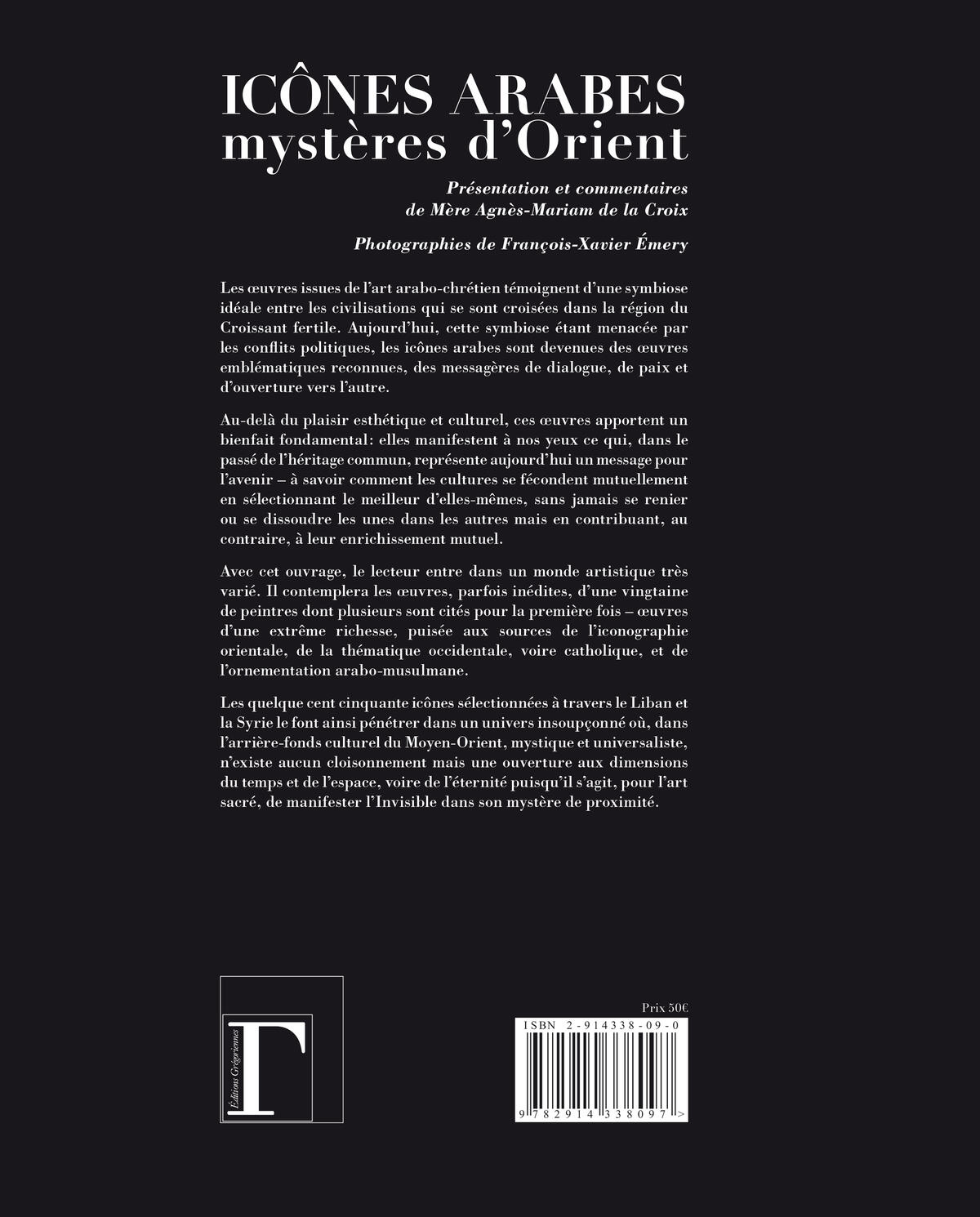
L’art arabo-chrétien fascine aujourd’hui pour ses valeurs esthétiques certaines mais il faut aussi reconnaître que les évènements qui secouent le globe jettent une lueur singulière sur de telles œuvres. Elles sont les témoins d’une symbiose idéale entre les civilisations qui se sont croisées dans la région du Croissant Fertile. Cette symbiose étant menacée de désagrégation à cause des conflits politiques, on cherche des références dans le passé pour dynamiser le processus d’entente et de tolérance au présent. Les icônes arabes sont devenues des emblèmes reconnus, des messagères de dialogue, de paix et d’ouverture.
Le présent ouvrage nous introduit dans un monde artistique diversifié. On contemplera les œuvres, souvent inédites, d’une vingtaine de peintres dont plusieurs sont cités ici pour la première fois. Les œuvres quant à elles recèlent une extrême richesse puisée aux sources de l’iconographie orientale, de la thématique occidentale, voire catholique et de l’ornementation arabo-musulmane. La disposition des thèmes classifiée par peintre ou par école facilite la compréhension de l’art arabo-chrétien, de son évolution et des styles complémentaires qu’il a façonnés.
La contemplation des quelques cent vingt-trois icônes sélectionnées à travers le Liban et la Syrie nous fera pénétrer dans un univers insoupçonné où, dans l’arrière-fond culturel abyssal du Moyen-Orient, mystique et universaliste, n’existe aucun cloisonnement mais une ouverture aux dimensions du temps et de l’espace, voire de l’éternité puisqu’il s’agit, pour l’art sacré, de manifester l’invisible dans son mystère de proximité.
Traduit en italien.
Arab-Christian art fascinates people today because of its aesthetic values, but the events shaking our world today also cast a unique gleam on these works. These works are proof that an ideal symbiosis existed between civilizations that crossed paths in the Fertile Crescent. Because this interdependency is now being threatened by political conflicts, we find ourselves seeking references from the past to encourage the peace process and the development of tolerance in the present. The Arab icons have become recognized emblems, promoters of dialog, peace and an openness toward others.
This work takes us into a diversified artistic world. We contemplate works that often times have never before been exposed; works of twenty artists, several of which are appearing for the first time. These works harbour an incredible wealth, drawing on Middle Eastern iconography sources, western, even Catholic themes and Arab-Muslim ornamentation. The arrangement by theme, classified by artist or school is helpful in understanding the art, its evolution and complementary styles that it has formed.
Contemplating the one hundred and twenty-three icons selected from Lebanon and Syria lets us penetrate into an unsuspected universe where, in the depths of the cultural, mystical, universalistic Middle-Eastern background there are no compartments, rather an opening to the dimensions of time and space, even eternity since the point of sacred art is to manifest the mystery of the invisible in the here and now.
The author:
Sister Agnès-Mariam de la Croix is the hygoumene (or abba) of the ancient St. Jacques L'Intercis Monastery in Qara, Syria and founder and President of the Antioch House.
She specializes in restoring art works and has a diploma from the Practical School of Higher Education. She has participated in the following projects:
• Foundation of the Antiochian Institute for icon restoration
• International supervision and coordination of restoration and reconstruction work of the fortified 6th century Saint Jacques-the-Mutilated Monastery in Qara, Syria.
• Coordination with UNESCO and the General Direction of Antiques in Lebanon for the restoration of Syrian frescos in Lebanon.
• Organization of the Arab Icon exhibit, Christian Art in the Levant at the Arab World Institute in Paris, France.
• Restoration of the Ain Taibeh Byzantine Qanats (from the 5th century) in Qara, Syria.
Translated into Italian.
El arte arabo-cristiano fascina por su auténtico valor estético. Sin embargo hay que reconocer que los acontecimientos que agitan el planeta imprimen un reflejo muy singular a esas obras, testimonio de la simbiosis ideal entre las civilizaciones que convivieron en la Media Luna Fértil. Dado que los conflictos políticos actuales amenazan con desagregar esa simbiosis, se buscan referencias en el pasado para impulsar el proceso de entendimiento y tolerancia en el presente. Los iconos árabes se han convertido en emblemas reconocidos, mensajeros de diálogo, de paz y de apertura.
Esta obra nos introduce en un mundo artístico plural. Admiramos las obras, inéditas casi siempre, de unos veinte pintores, algunos mencionados por primera vez. Las obras poseen una enorme riqueza inspirada en la iconografía oriental, en la temática occidental, incluso católica, y en la ornamentación arabo-musulmana. La disposición de los temas, clasificados por pintores o por escuelas, facilita la comprensión del arte arabo-cristiano, su evolución y los posteriores estilos complementarios.
La contemplación de los ciento veinte iconos seleccionados en Líbano y Siria nos introducirá en un universo insospechado cuyo telón de fondo cultural abisal de Oriente Próximo, místico y universalista, carece de separaciones y goza de una apertura acorde con las dimensiones del tiempo y del espacio, incluso con la eternidad, pues el arte sacro se propone manifestar lo invisible en su misterio de proximidad.
Traducido al italiano.
Avant-propos
Remerciements
Les icônes arabes et leur environnement culturel
Notes de l’introduction
Témoins primitifs
École d’Alep
Maîtres du XVIIIe siècle
Mikhâïl Polychronis et son école
L’école de Jérusalem
École de Jérusalem
Derniers peintres du XIXe siècle
Lexique
Index des peintres arabo-chrétiens
Bibliographie